Tuesday, February 16, 2010

Scientific writing + Plagiarism in different disciplines

So I read through the manuscript that I was asked to review, and I've decided to go for it. It's not directly in an area with which I have tons of experience, but I know enough about it in a general way that I've been able to do some background reading and browsing through the references to get up to speed. If this were a longer paper, one with more technical difficulty, or for a higher level journal, I'd ask for a rain check. But I've decided that I can do this, and it will be a learning experience, and I have to start somewhere. I'm up to the challenge. And hopefully I'll be able to get a reality check/advice from either my advisor or a good friend and post-doc in our lab.

I'm only about halfway through an intensive reading of the manuscript, and it's already raised some interesting challenges and presented me with issues I've never thought about before. I'm feeling more and more like I'll actually have some useful advice and critiques to share. I have suggestions already for improving the intro, extending and clarifying the analysis, and even on a technical aspect of a certain statistical test/related assumptions.

One aspect though is particularly tricky; to summarize (while maintaining confidentiality)...

My big question for this post is: What constitutes plagiarism in scientific literature? (I've heard more than one person refer to the Supreme Court quote "I know it when I see it" during discussions of this topic). I have some previous experience working as a peer tutor for college level english courses. As you might expect, as a discipline, English/Literature seems to me to place much more emphasis on particular sequences of words or phrasings as being the intellectual property of an author. To avoid plagiarism we advised students to substantially paraphrase and reword similar sentences, or to use a cited, direct quote employing lovely punctuation: the ever popular " and ". In this paper I'm reviewing, after looking up references, it has become apparent to me that entire sentences can be traced to previous articles by different authors, almost verbatim (usually with the omissions or substitutions of only a couple of words).

Now I'm left to wonder how big of a deal this is. It makes me uncomfortable because I know it would be a problem for the english students I used to advise, but this is a different context. Scientific writing is necessarily more precise, and often there are fewer alternative ways of saying the same thing. The emphasis in science is on the creativity of research ideas and methods, the ideological content that is conveyed by language, and less so on the creativity of language used for communication.

Further muddying the waters, after looking at several of the citations, its clear that existing papers in the literature also use very very similar language when describing this particular kind of model, although usually these are multiple papers by the same author (not the same group as the one behind the paper I'm currently reviewing, and in better journals by and large). Is it ok to plagiarize yourself? If other papers in the literature use such identifiably similar language, is this standard for the discipline and I just haven't paid close enough attention before?

I think that a really important aspect of plagiarism is intent. Intentional and willful plagiarism without appropriate citations is a much more clear cut situation in my opinion - it's flat out wrong and demands serious consequences. Unintentional plagiarism is more grey, and I think requires more subtlety in its resolution. In this particular case, it's likely that the authors don't speak English as a first language, and there's no obvious intent to disguise the source of the models and ideas as citations are given. If direct quotes and quotation marks were used, I wouldn't blink (except for how rarely direct quotes seem to show up in journal articles). The wording is just soooo similar. Some journals have (relatively) clear policies on this, but not the one I'm reviewing for.

I'd love to hear what you all think... Are standards for plagiarism different in different disciplines? Should they be? And, (this is the part I'm stuck on right now), what is the appropriate role of a reviewer in this kind of situation? What kind of accommodations, if any, should be made due to linguistic and cultural differences in the peer review and publication process, especially as research becomes more and more international?

In upcoming posts I'll say more about this process as I work through it and figure out more about the role of a reviewer.

Theo out.

Friday, February 12, 2010

The hazards of being a scientist

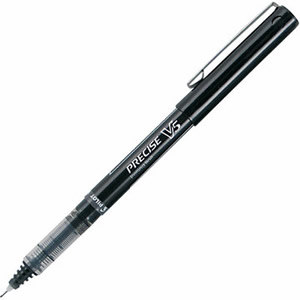
As a graduate student, I do a lot of writing. And when I do mathematics, I really like begin able to write in multiple colors; it helps me see different parts of equations, or pick out particular variables, or make clear thought-graphs. My favorite pens for the last several years have been this kind:


I can get them in packs of 5 or 6 different colors, they're great. Lots of ink, they last a long long time. (Tiny caveat/caution - I no longer take these with me on plane trips to conferences, etc, as the change in air pressure seems to cause them to leak more often than not).

However, as I learned the other day, it's a very bad idea to say, absent mindedly place one of the red pens in your pocket without putting the cap on it first. About halfway through the day I noticed a huge red splotch on the side of my pants. (Not being cool enough/well dressed enough to wear a shirt with pockets on a regular basis, and not having found a pocket protector made for pants, I often carry my pens unprotected in my pants pocket). About half a reservoir's worth of red ink had soaked into my jeans. A stack of paper towels later, I was able to absorb enough of it to not risk staining anything else. But I had to spend the rest of the day walking around looking like my leg was gravely wounded.

The side of my leg is still pink, although I've had some success getting the stain out of my pants surprisingly. I let them soak overnight after rubbing in a baking soda paste, and then washed them with some oxyclean. The next time around, I figured that if baking soda paste worked well, then things could only improve if I rubbed in some baking soda paste and then dumped some vinegar on the stain. I mean, who knows, right? That was always the best course of action back when I was a practicing kitchen scientist. And I have vague notions that maybe the CO2 production will bubble through the fabric and release the ink somehow. Probably crazy... but it sure was fun to mix the two together again!

So, the moral(s) of this story:

1) Always use protection.
2) When in doubt, use vinegar and baking soda.
3) Maybe remember to put pen caps on before jamming pens into your pocket.

Theo out.

Science + Romance + NPR

Does it get any better than that combo?

Check out their neat story about the Voyager project that brought together Carl Sagan and Ann Druyan here

Wow. And you can listen to parts of the recording of language, music and biology placed on a gold record and carried onboard the Voyager spacecraft as they push on into outer space.

Monday, February 8, 2010

Writing a review???

The other day, I opened up my email, and found a message from an editor at a lower-level, peer reviewed ecology journal. This polite message was address to "Dr. Theo Miss-spelledLastName", and turned out to be a request that I consider reviewing the attached manuscript to evaluate it for publication in their journal, based on provided criteria.

First reaction (worth enjoying):
WOW! This is pretty exciting, I've never gotten such a request before. And it definitely counts as being another little step towards becoming a bonafide scientist.

Further reflection:
Peer review is a hugely important part of scientific pursuits; it's what helps us set and assure standards of quality, rigor and academic integrity in our discipline, both in the work of others, and in our own. Reviewers to the best of my knowledge usually remain anonymous, so they are free to provide honest, critical (and hopefully constructive!) opinions without fear of political/career repercussions. In its most idealistic sense, it also helps to free the evaluation of the merit and originality of ideas from being dictated by a limited number of people (publishers, editors), making science more democratic, and hopefully dissuading the rejection of an idea because it is unpopular, instead of actually unsound. (Whether or not this always works out the way it should is certainly a matter of some debate).

Any paper submitted to a journal that goes out for review usually needs at least two reviewers. Without doing any explicit math here, I'm sure you can see that the number of reviewers needed to evaluate all of the papers being submitted to this, and other journals, adds up pretty quickly! Most of this process is handled through a sort of unspoken karmic system - one of our responsibilities as academics that want to have our own papers published someday is to also serve as a reviewer for the work of others. When people do their share, this helps support the important goal of maintaining an effective peer review system. (This is overly rosy and deserves qualifiers; I know that less than ideal things happen, but I don't want to go into that at present).


I'm a little conflicted over this one. I'm excited and honored to be asked (although I'm sure in a few years it'll seem like no big deal), especially as someone must have referred me - which probably means they think I can do a good job. I want to do my karmic share. Then, on the other hand, I'm no expert, I haven't even published yet myself (just one failed attempt), I have a lot yet to learn and a bunch of projects on my plate, and they didn't even get my name right.

Another part of the karmic system is that the not-yet-published manuscripts that you read as a reviewer are held in confidence - in other words, you can't take their ideas before they've published them, or copy their work, or distribute it to other people. I don't know if this is kosher or not, but I did take a brief look through the paper to try to get a sense of how challenging it is prior to making my decision... I think I could do it, although certainly not as well or as thoroughly as someone with more experience and knowledge.

I'm going to sleep on it (again), and will make a decision tomorrow; I don't want to slow down the process if I choose not to review it, as they'll have to locate someone else. Otherwise, I have several weeks. I want to do my share in order to do right by the system, but I also want to do right for the authors of the manuscript and make sure they get a fair, knowledgeable and useful review.


Wednesday, February 3, 2010

Ups and downs

So lately I've been feeling very positive about my work and productivity. To summarize:

- I'm keeping up with course work for two classes
- I've presented at two different lab meetings
- I've attended a slew of seminars
- I'm making significant progress on two different manuscripts both headed towards publication, on both of which I'll likely be first author. Not earth shattering work, but interesting and solid in my opinion.
- I'm learning LaTeX
- I've been able to squeeze in select reading on a potential study system, and I'm feeding myself small morsels of a plant ecology text book and absorbing more knowledge on hierarchical modeling.

So I'm doing all of this stuff, and making lists and evaluating myself and checking things off. Which is good. Feels way better than last semester, and I'm more involved and interested in what I'm doing.

But somehow, all it took was a 30 minute interaction with my advisor while walking across campus, containing the phrase 'So, do you have any more thoughts on your thesis and what you want to do this summer?' and now I feel like everything that I've been doing is just filler, because I don't feel a bit closer to figuring that out or converging even slightly on a topic. 0 to substantial anxiety in under 60 seconds... yeehaww. Major downer.

I'm enjoying a lot of what I've been up to, even writing (!) which I often find to be a struggle/boring. But the more I think about it, the more I'm convinced that I'm far too tool oriented. I like problems where I learn more tools - different programming languages, different mathematical techniques, more statistics or experimental methods. I'm fascinated by all of this technology... But I think I have to stop picking out projects based on the tools I get to learn! I really should be selecting them based more on the questions they're addressing... otherwise I'm going to end up being a hell of a technician, but probably not much of a scientist.

The sensations are very similar to my experience last year trying to pick out a graduate school/advisor, except there the alternatives were well defined and finite. This decision could be just as significant/important, but is so much more open ended. There's no way to make up a pros and cons list of insanity like I did last year. I don't know how to tackle all of this, particularly when it's so easy to fill up all of my time working on other things. Ugh.

Tuesday, January 19, 2010

Intimidating questions

For one of my seminar classes this semester, I'm supposed to answer the questions:

1) If you were to write a single paper on your dissertation research, what would be the title?
2) What is the most important unresolved question in your field of research?

Panic mode! These are very important and cutting questions, that I need to think about... but which I feel vastly unprepared to answer. Given that I have no dissertation research yet, or even a dissertation topic. And given that I'm still learning more every day about my (broad) field of research. I've been procrastinating, but I only have an hour left so I'm about out of time.

I wrote down a bunch of keywords for the things I'm interested in, and did a google search. Just to see if any insane people have tried combining ALL of these topics at once with any success. Surprisingly, a paper by my advisor came up as the fourth hit. I guess that's a good sign, as I sometimes wonder if I'm in the right lab (probably not a unique worry).

Ok, time to hammer out some BS title using some of these words and picking a system.

Thursday, January 7, 2010

2010: Graduate Semester Two

*high five* if you get the subject line book reference...

One of my biggest "New Years" resolutions this year has got to be trying to implement regular, constructive evaluation of my work and progress. I need the self-awareness and motivation that I hope this will increase. In this spirit, I tried to put together a big big list of what my goals are for 2010, academically and personally. Things I would like to do. Things that I have to do, but hope to do well. Almost all of that list is here (it's long, no obligations to read it):

Professional/Academic
  1. Dissertation topic - I need one. Even in a vague incarnation. So that I can start directing my reading, and planning summer experiments.
  2. Graduate committee - this sort of has to happen after #1, but also has to happen before I know that I've finished my coursework.
  3. Publications - I'm currently sitting on 2-3 projects that, if written up appropriately, could almost certainly be published somewhere. I need to do this. I've been sucking at making headway, mostly due to procrastination, and this needs to change if I'm going to make this science thing work. I care less right now about where they get published than that they do get published somewhere, and that in the process I start figuring out a good system for writing. Maybe I need to schedule a weekly time for doing this.
  4. Finish coursework - after this fall's experience with classes, I've pretty much decided that there aren't anymore classes that are really important/useful for me to take, that I can't learn more efficiently and effectively on my own, if I'm disciplined enough. I wasted a lot of time. Now I want to finish off the bare bones requirements that I have remaining, and move on (there's some hope of actually accomplishing this by the end of this semester, subject to the dictates of the committee I need to assemble - see #2).
  5. Be selective about seminar attendance.
  6. Take better notes - when reading and in seminars. Things make sense at the time, but I don't remember them as well as I usually think I will. I also need to take notes in a more organized fashion so that I actually can find, and go back and look at the information I bothered to record.
  7. I need to start practicing generating ideas. I'm going to get a special notebook and write down all of my crazy ideas and questions. Maybe I'll keep track of how many I have each week.
  8. READ MORE - fewer classes for me this semester. I need to sit down and actually read through the stack of interesting books and reference materials I have fun picking out but rarely actually read. Same goes for journal articles. I'm good and finding and collecting them, I need to get better at internalizing them.
  9. Statistics - one of my old undergraduate bad habits reappeared this past fall. Despite loving my statistics course, I shirked on the reading from the assigned texts. I really need to go through this stuff, I know I would find it interesting and useful.
  10. Learn LaTeX - I'm auditing a seminar on this weekly.
  11. Spend less effort on classes and more on my own scientific interests - probably.
  12. Remember to be EXCITED about what I'm doing and the opportunities I have.
  13. Every time I read a theory paper, I need to try to think up a corresponding experiment. I've decided there's no one around here that's going to force me to think about this - I have to push myself to do it if it's going to happen. And this is a skill I dearly want to have, so I don't end up spending my life generating, but never empirically testing, theories.
  14. Table of Contents - I signed up to receive a lot of them. So I need to actually read them instead of letting them sit in my inbox for a few weeks and then deleting the backlogs.
  15. Learn about experimental opportunities at my field station - talk to people about what they're doing, and what resources, data sets and opportunities are available to me as I'm designing my own project.
  16. Hang out with more empiricists - I'm going to try to sit in on some lab meetings of another lab group that does a lot of good empirical work, again as part of trying to train my brain.
  17. Reading lists - I want to find a good way to compile them and actually make use of them, instead of just dumping reading material into folders from whence it rarely again sees the light of my LCD screen.
  18. Self evaluation - On a regular basis, look at my goals and evaluate my progress towards them.

Personal:

  1. Regular exercise - this makes me better mentally and physically. I need to set up something regular here in the city; attending weekly soccer games on friday nights out at the Bio station didn't work well - by that time I was always just too tired mentally and physically to have the motivation to make it happen. I may join a different team here in the city; my cousin and I are also going to try to set regular racquetball matches.
  2. Break some habits - less TV, less eating out, a few other things
  3. Food - do a better job of eating regularly, more fruit, less processed stuff. I should do this to unwind instead of TV shows on hulu.
  4. Plan my garden - for this summer out at the station!!! very exciting
  5. Spend less time being stimulated - that probably sounds weird. What I mean is, not spending 12+ hours in front of a computer screen consuming random information and noise and visuals. I could use more regular, healthy doses of silence and existence, instead of information overload drowning out self reflection.
  6. Meet non-science people - I realized the other day that everyone I know here in the city, and actually the whole state, on anything like a friendship basis, is a scientist of one variety or another. While I love scientists, I really need more balance and diversity than this. Not sure how to go about it yet.
  7. Try attending the catholic graduate student group get-togethers - this might help with #5 and #6 if I stop chickening out.
  8. Sleep wake cycle - get up earlier, go to bed earlier, make both times more consistent. I'm a morning person, and I need to get that schedule back again, even though a lot of my friends are more night owls. I'll be happier and more productive.
  9. Correspondence - stay in touch with friends better.
  10. Say NO more often
  11. Do something creative and non-scientific
  12. Volunteer - I think I'd be happier if I were engaged in some fairly regular activity doing something with tangible, short term, realized positive results. Would make me feel less useless/pointless, and meet new people.
Might add more things as I think of them. This is a lot to do... but no one ever accused me of not being ambitious in my projects!!!

Happy New Years everyone!